Earls Court waste removal services for terraces
Posted on 20/05/2026
Earls Court Waste Removal Services for Terraces: A Practical Local Guide
Terraced homes in Earls Court have a character all their own: narrow front paths, shared side access, awkward stairwells, and the sort of storage spaces that quietly fill up over time. That charm is part of the appeal, but it also makes clearing rubbish, old furniture, or builders' debris more of a puzzle than a simple lift-and-go job. This guide to Earls Court waste removal services for terraces is written to help you understand what works, what to avoid, and how to choose a service that fits the realities of local homes. If you are planning a clear-out, a refurb, a move, or just getting on top of a house that has accumulated too much "we'll deal with it later" stuff, you're in the right place.
To make the next step easier, we'll cover access issues, service options, disposal methods, compliance, and the practical details that usually matter most on the day. And yes, we'll keep it grounded. No fluff.

Contents
- Why Earls Court waste removal services for terraces Matters
- How Earls Court waste removal services for terraces Works
- Key Benefits and Practical Advantages
- Who This Is For and When It Makes Sense
- Step-by-Step Guidance
- Expert Tips for Better Results
- Common Mistakes to Avoid
- Tools, Resources and Recommendations
- Law, Compliance, Standards, or Best Practice
- Options, Methods, or Comparison Table
- Case Study or Real-World Example
- Practical Checklist
- Conclusion
- Frequently Asked Questions
Why Earls Court waste removal services for terraces Matters
Terraces are wonderful to live in, but waste removal in a terrace is rarely straightforward. In Earls Court, many properties sit on busy streets, with limited kerb space and tight access from the front or rear. That means a pile of old wardrobes or renovation rubble is not just "rubbish" for long. It becomes a blocking point, a nuisance to neighbours, and sometimes a real safety issue.
What makes the local context important is the combination of density and access. A terraced property may have a narrow hallway, steep stairs, small mews-style access, shared entrances, or parking restrictions that make a DIY clearance harder than it first looks. You might be able to get a few bags into a car, sure. But once you're dealing with broken furniture, garden waste, or a full room clearance, the job can quickly snowball.
There's also the simple matter of time. Most people don't want waste lingering in front of a house for days. It looks untidy, creates trip hazards, and can attract complaints. A professional service helps keep the process tidy and controlled, which matters even more in a terrace where one messy job can affect several households. If you're also thinking about a broader clean-up or move, our services overview is a useful place to see how different clearance options fit together.
Practical takeaway: In terraces, waste removal is not just about volume. It's about access, timing, neighbour impact, and getting the job done without turning the street into a staging area.
How Earls Court waste removal services for terraces Works
Most terrace waste clearances follow a fairly simple process, though the details matter. A good provider will start by understanding what needs removing, where it is located, and how easily it can be carried out. That sounds obvious, but in terrace properties the route matters almost as much as the rubbish itself.
Typically, the process looks like this:
- Initial assessment: You describe the items, the access, and any awkward bits such as basement steps, loft contents, or rear garden waste.
- Quote or estimate: The service gives a price based on labour, load size, and disposal requirements. For more detail on this stage, see the page on pricing and quotes.
- Arrival and planning: The team checks access, protects surfaces where needed, and decides the safest carrying route.
- Removal: Items are taken out, sorted where possible, and loaded efficiently.
- Disposal and recycling: Reusable or recyclable materials are separated in line with best practice. You can read more about that approach on the recycling and sustainability page.
- Final sweep: The area is left clear, so you are not stuck with dust, broken bits, or random packaging at the end. Lovely when that happens, honestly.
For terraces, the team may need to work item by item rather than taking everything in one dramatic sweep. That is not a bad thing. It often means fewer scuffs, less disruption, and a better result overall. If the waste comes from a renovation, the job may overlap with builders' waste clearance, especially where plasterboard, timber offcuts, tiles, or mixed rubble are involved.
Some customers assume a skip is the obvious answer. Sometimes it is. But a terrace in a busy London street can make skip placement awkward or expensive, especially if parking and pavement space are limited. We'll compare options later on.
Key Benefits and Practical Advantages
There's a reason people choose organised waste removal rather than piecing together a DIY solution. The advantages are practical, not theoretical. In a terrace, that matters.
- Less disruption: Items are removed quickly instead of sitting around in hallways, on stair landings, or out front.
- Safer moving: Heavy or awkward objects such as wardrobes, beds, appliances, and broken furniture are handled with care.
- Better use of space: A cleared spare room or loft can suddenly become usable again.
- Cleaner finish: Professional clearance usually means less mess left behind.
- Reduced stress: You do not need to organise a van, lift heavy items, or make repeated trips to disposal points.
- Improved recycling outcomes: Waste can be separated more effectively than if everything is thrown together in a rush.
In a terrace, the "small wins" often matter most. A cleared hallway means no more side-stepping an old mattress every morning. A tidy front area means the house looks lived-in, not neglected. And if you're preparing to sell, rent, or redecorate, that clean first impression can be surprisingly powerful. For homeowners thinking about value and presentation, our guides on buying and selling homes in Kensington and Kensington real estate are worth a look.
Who This Is For and When It Makes Sense
Not every clear-out needs a full service. But there are plenty of situations where Earls Court waste removal services for terraces make a lot of sense.
- Homeowners doing a declutter: The loft, under-stairs cupboard, and back room can fill up with old bits surprisingly fast.
- Landlords between tenancies: Quick turnaround matters, especially when a property needs to be ready for the next occupant.
- People moving house: Moving is stressful enough without taking unwanted junk with you.
- Renovating households: Old bathrooms, kitchens, and flooring generate bulky waste that needs proper handling.
- Families clearing inherited items: A house clearance can be emotionally loaded, and getting help is often the sensible choice.
- Residents with limited mobility or time: If lifting and sorting is difficult, a service can remove a very real burden.
To be fair, the job often starts with one room and spreads to three. A box of old cables, a broken bookcase, a few bags from the shed... then you realise the terrace has been quietly storing half your past life. Happens all the time.
If the project is larger and involves several rooms, the dedicated house clearance service may be more appropriate than a simple one-off rubbish collection. For smaller loads, though, rubbish collection or junk removal may be enough.
Step-by-Step Guidance
If you want the day to run smoothly, a little preparation goes a long way. The good news is that terrace clearances are manageable when you think ahead.
1. Sort the waste by type
Start by separating bulky furniture, general household junk, garden waste, and renovation materials. You do not need to create a perfect sorting system, just a practical one. The clearer the load, the easier the quote and the faster the collection.
2. Identify access points
Check whether items need to move through the front door, a narrow hallway, a rear garden, or an upper floor. Measure awkward pieces if needed. A table that seems harmless in the living room can become a full-scale problem on a sharp staircase.
3. Flag anything delicate or risky
Let the team know about fragile flooring, tight bannisters, low ceilings, or shared entrances. Better to say it early than find out the hard way when a wardrobe meets a wall. Not ideal.
4. Remove personal items
This sounds obvious, but it is worth saying. Check drawers, cupboards, and behind furniture before collection. A quick final sweep prevents accidental disposal of documents, keys, chargers, or sentimental bits that are a bit too easy to overlook.
5. Arrange timing that suits the street
Terrace streets in Earls Court can be busy, and timing matters. Mid-morning or early afternoon often works better than peak commuter periods. If parking or loading restrictions are likely to affect the job, discuss them in advance.
6. Confirm disposal expectations
Ask how items will be handled after collection. Reuse, recycling, and responsible disposal should be part of the conversation. If you want a deeper look at how the business approaches that side of things, read the about us page and the section on insurance and safety.

Expert Tips for Better Results
Over the years, a few habits make terrace clearances much smoother. Nothing flashy. Just the kind of detail that saves time and avoids headaches.
- Group items by carry difficulty: Put the heaviest or most awkward items closest to the exit, if safe to do so.
- Leave a clear path: A hallway with shoes, bikes, and bags everywhere slows everything down.
- Use labels for mixed rooms: If you are clearing a loft or cellar, label keep, donate, and remove. It helps more than you'd think.
- Take photos before collection: This is especially useful for larger jobs, quotes, or landlord handovers.
- Ask about protective measures: Good teams will know how to handle awkward staircases and narrow entrances with minimal fuss.
- Plan for one extra bag: There is almost always one more bag. Always.
One small but useful tip: if you are clearing a terrace after a renovation, keep clean items well away from dusty waste. It sounds simple, but a small lapse can leave clothes, bedding, or boxed belongings covered in fine debris. That dust has a sneaky way of finding everything.
For garden-facing terraces, a separate look at garden waste removal can help if the job includes branches, soil, cuttings, or old planters.
Common Mistakes to Avoid
Most problems with terrace waste removal are preventable. Usually, it is not the rubbish itself that causes trouble. It is the planning around it.
- Underestimating access: A service can only plan properly if it knows about narrow stairs, shared entrances, or rear-only access.
- Leaving sorting until collection day: This slows the job and can increase confusion.
- Choosing the cheapest option without checking what is included: A low headline price is not much use if it excludes labour, loading, or disposal.
- Mixing renovation waste with general rubbish: Different waste streams can affect handling and recycling.
- Forgetting parking constraints: In Earls Court, street logistics can matter as much as the load size.
- Assuming every service is the same: Some providers are better suited to small clearances, others to larger or more complex jobs.
Another common slip is waiting until the waste becomes urgent. You know how it goes. The old sofa sits there for weeks, then suddenly you need the room tomorrow. At that point, any clearance feels more stressful than it needs to be. Earlier is easier. Usually much easier.
Tools, Resources and Recommendations
You do not need a warehouse of equipment to prepare for a terrace clearance, but a few simple tools help enormously.
| Tool or Item | Why It Helps | Best For |
|---|---|---|
| Heavy-duty bin bags | Useful for smaller household waste and mixed light items | Decluttering, bagged rubbish, quick sorts |
| Labels or marker pens | Makes it easy to separate keep, donate, and remove items | Room clearances, lofts, storage spaces |
| Gloves | Protects hands from dust, splinters, and awkward edges | DIY prep before collection |
| Measuring tape | Helps check large furniture against stairways or doorways | Bulky furniture, white goods, hall access |
| Camera phone | Handy for quoting, planning, and recording before-and-after condition | Landlords, movers, larger clearances |
For bigger projects, it also helps to read up on related services before deciding. If the job includes old sofas, beds, or wardrobes, furniture disposal may be the right fit. If you are clearing a basement, spare room, or roof space, loft clearance or even garage clearance could be more relevant.
And if you want a broad local service view, the rubbish clearance page and waste removal page are helpful starting points.
Law, Compliance, Standards, or Best Practice
Waste removal in the UK is not just about convenience; it also carries responsibility. You do not need to memorise every detail of waste law to make a sensible choice, but you do need to know the basics.
The first rule of thumb is simple: your waste should go to someone who handles it properly. A reputable provider should be able to explain how they manage sorting, transport, recycling, and disposal. That does not mean you need a technical lecture. Plain English is fine. In fact, plain English is better.
There are also a few best-practice points worth keeping in mind:
- Duty of care: Waste should be transferred to a responsible carrier and handled in an appropriate way.
- Safety: Heavy lifting, sharp edges, dust, and confined staircases all call for care.
- Insurance: For terrace properties, it is sensible to use a provider with suitable insurance in case of accidental damage.
- Transparent terms: The service should explain what is included, what is not, and how extra items are treated.
- Environmental handling: Reuse and recycling should be considered before disposal where practical.
If you are comparing providers, a clear terms and conditions page and straightforward payment and security information are reassuring signs. Not glamorous, but useful. Always useful.
For customers who want to understand the company's commitment in broader terms, the site also includes a modern slavery statement and an accessibility statement. Those pages matter because trust is built by the boring stuff as much as the obvious stuff.
Options, Methods, or Comparison Table
There is no single "best" way to clear waste from a terrace. The right method depends on access, timing, volume, and the type of material involved. Here is a straightforward comparison.
| Method | Best For | Pros | Watch Outs |
|---|---|---|---|
| Man and van rubbish removal | Small to medium loads, mixed household items | Flexible, quick, better for tight access | Less suitable for very large or heavy demolition waste |
| Skip hire | Longer projects with a steady stream of waste | Handy if the work spans days or weeks | Needs space, permits may be needed, not ideal on restricted streets |
| Full house clearance | Whole-property clear-outs or sensitive clearances | Comprehensive and efficient | May be more service than you need for a small job |
| Specialist builders' waste clearance | Renovations, rip-outs, and trade debris | Suited to heavy or mixed construction waste | Not always the right choice for domestic furniture or general junk |
For many terrace properties in Earls Court, a direct collection service is the simplest answer. It keeps disruption low and avoids the awkward business of parking a skip outside a narrow street. If you are undecided, it can help to think about the job in terms of access, not just load size. That one shift clears up a lot.
Case Study or Real-World Example
Imagine a typical terrace in Earls Court: three floors, a basement, and a back room that has quietly become a storage cave. There is an old sofa, two broken dining chairs, a pile of flat-pack packaging, some paint tins, and a few bags from a long-postponed declutter. Nothing dramatic. Just enough to make the house feel cramped.
The residents first consider doing it themselves. Then they look at the staircase. Then the front door width. Then the fact that the sofa will not fit neatly through the hallway without a bit of manoeuvring, and the mood changes. Sensibly.
A clearance team is brought in. They check access, plan the route, move the items carefully, and separate the waste for disposal. The job finishes the same day, the back room can finally be used properly, and the house feels calmer. Not because the rubbish was huge. Because the job had been hanging over them.
That is the real value of professional waste removal in a terrace. It is often less about dramatic transformation and more about removing a stubborn obstacle. Once that obstacle is gone, everything else feels easier. A bit lighter, even.
Practical Checklist
Use this simple checklist before booking your terrace clearance in Earls Court.
- List the items you want removed.
- Separate general rubbish, furniture, garden waste, and builders' debris if possible.
- Check whether the route out is through the front, rear, loft, cellar, or side access.
- Measure any large furniture or awkward items.
- Move personal belongings out of drawers, cupboards, and hidden storage spaces.
- Note parking restrictions or access constraints on your street.
- Ask whether recycling and responsible disposal are included.
- Confirm the quote structure and what could increase the price.
- Decide whether a rubbish collection, furniture disposal, or full house clearance is the better fit.
- Book a time that causes the least disruption to you and your neighbours.
Expert summary: If you prepare the access, clarify the load, and choose the right type of service, terrace waste removal becomes much simpler than most people expect. The process is smoother, the result is cleaner, and you avoid the usual last-minute scramble.
Conclusion
Earls Court waste removal services for terraces work best when they are planned around real homes, not abstract ones. Terraces have stairs, tight entries, shared boundaries, and limited room for error. The best services understand that and adapt accordingly.
If you remember just one thing, make it this: the right clearance solution is the one that fits the property, the waste type, and the time you have. That could be a small rubbish collection, a furniture disposal job, a more involved house clearance, or a specialist builders' waste service. There is no prize for making it harder than it needs to be.
When in doubt, ask about access, disposal, recycling, insurance, and timing before the job starts. That simple conversation saves a lot of faffing later on. And in a terrace, saving faffing is worth a lot.
Get a free quote today and see how much you can save.
If you are ready to talk through the details, you can also contact the team here for a straightforward next step.



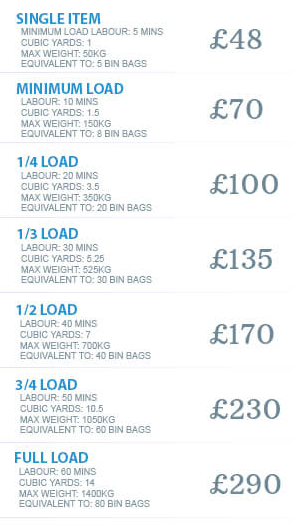
 Tipper Van - Rubbish Removal and Waste Disposal Prices in Kensington W8
 Luton Van - Rubbish Removal and Waste Disposal Prices in Kensington W8