Royal Borough of Kensington and Chelsea rubbish rules and fines
Posted on 07/07/2026
Royal Borough of Kensington and Chelsea rubbish rules and fines: a practical guide for residents, landlords and businesses
If you live, work, let property, or run a business in the Royal Borough of Kensington and Chelsea, rubbish rules are one of those things you do not think about until something goes wrong. A bag is left out too early. A bulky item sits on the street overnight. A fly-tipped mattress appears outside your building and suddenly everyone is asking who is responsible. The reality is simple: understanding Royal Borough of Kensington and Chelsea rubbish rules and fines can save you stress, avoid nuisance complaints, and help you keep your street tidy without guesswork.
This guide explains the basics in plain English: what the rules are trying to achieve, how enforcement usually works, where people slip up, and how to stay compliant in everyday situations. It also covers practical steps for households, landlords, office managers and anyone dealing with a one-off clear-out. If you want the broader service picture too, the services overview is a useful place to start, and for local background on the area itself, you may also find a guide to the neighbourhood of Kensington London helpful.

Why Royal Borough of Kensington and Chelsea rubbish rules and fines matters
In Kensington and Chelsea, waste is not just a private housekeeping issue. It affects pavements, bin stores, service roads, shared entrances, front gardens, and the feel of whole streets. Let's face it, the borough has a lot of high-footfall areas, tight residential roads, mixed-use buildings and lots of property turnover. That combination makes rubbish control a real operational issue, not a background detail.
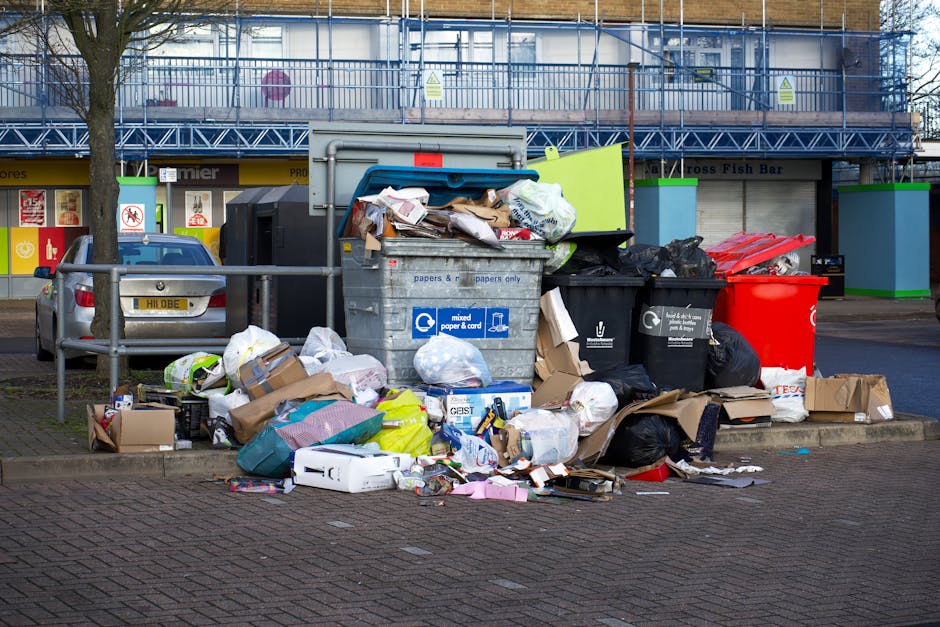
The fines exist because poor waste handling creates predictable problems: litter, odours, blocked access, pests, complaints from neighbours, and visual clutter. On narrower streets, even one badly placed bag can be enough to cause a chain reaction. Someone nudges it aside. A seagull or fox tears it open. Then the mess spreads. Nobody needs that on a wet Monday morning.
For residents, the practical value of understanding the rules is pretty obvious: fewer complaints, less chance of enforcement action, and a cleaner place to live. For landlords and businesses, it goes further. Waste mistakes can damage tenant relations, upset service providers, and create avoidable costs. If you manage a flat block or a small office, you already know how quickly a minor disposal issue becomes a bigger management headache.
Expert summary: In this borough, good rubbish practice is not about being overly tidy for its own sake. It is about keeping disposal controlled, predictable and traceable. That is what reduces risk.
If you are comparing waste solutions for a move, renovation or office clear-out, the local context matters too. Narrow access, busy collection points and shared buildings often call for a more flexible approach such as rubbish clearance in Kensington or house clearance support in Kensington, rather than relying on a one-size-fits-all routine. The area is rarely one-size-fits-all. Truth be told, that is half the battle.
How Royal Borough of Kensington and Chelsea rubbish rules and fines works
The borough's rubbish rules are usually built around a few core principles: put waste out correctly, keep it contained, respect set-out times, and use the right route for bulky or special items. The exact details can vary by property type, street layout, and whether you are dealing with domestic refuse, recycling, garden waste, commercial waste or construction debris.
Fines generally come into play when rubbish is put out in a way that creates a nuisance, is unauthorised, or appears to be dumped. That can include leaving bags on the pavement too early, using the wrong container, placing items beside bins rather than inside them, or abandoning furniture and builders' waste in shared spaces. Fly-tipping is a different and more serious category, and it can bring stronger action than an ordinary bin infringement.
In practice, the borough's enforcement approach tends to be about visible compliance. If waste is where it should be, properly bagged or stored, and moved at the correct time, the risk drops sharply. If it is not, the consequences can range from warning letters or fixed penalties to removal charges and further escalation. The exact route depends on what happened and how it is recorded.
A small but important detail: shared buildings often blur responsibility. If a communal bin store is overflowing, is it a resident issue, a managing agent issue, or a contractor issue? Often it is a bit of all three. That is why clear internal procedures matter. A good building policy beats a dozen apologetic emails after the event.
When rubbish is not ordinary household waste, a different disposal method may be more sensible. For example, someone emptying a garage, basement or loft may be better off booking a targeted service such as garage clearance or loft clearance rather than trying to stage items on the street and hope for the best.
Key benefits and practical advantages
Following the rules is not just about avoiding a fine. There are several real-world advantages that are easy to miss until you compare the before-and-after.
- Fewer complaints from neighbours and building managers. That matters a lot in shared terraces, mansion blocks and converted flats.
- Lower enforcement risk. The less your waste looks like a problem, the less likely it is to become one.
- Cleaner kerbside presentation. This helps a street look cared for rather than neglected.
- Better access for pedestrians, pushchairs and deliveries. Small obstruction, big frustration. You know how it goes.
- Less chance of pest activity or scatter. Proper containment keeps bags and loose rubbish from being pulled apart.
- More efficient clear-outs. Once a property has a predictable disposal system, removals become faster and cheaper to organise.
There is also a softer benefit: peace of mind. Nobody enjoys wondering whether a bag placed outside at the wrong time might lead to a penalty. If you are in the middle of a move, sale, or refurbishment, that low-level anxiety is the last thing you need.
For landlords in particular, clean waste handling protects the wider condition of the property. That is why some owners coordinate disposal as part of end-of-tenancy work, often alongside house clearance services or broader property preparation before reletting. It is boring admin, yes. But boring admin prevents messy problems.
Who this is for and when it makes sense
This topic matters to a lot more people than first appears.
- Residents who need to put out household waste correctly and avoid unnecessary penalties.
- Landlords managing tenant waste, move-outs and shared bin arrangements.
- Letting agents and property managers responsible for block compliance and resident guidance.
- Business owners dealing with office waste, packaging, fit-outs or clearance work.
- Homeowners clearing lofts, gardens, garages or outbuildings.
- Event organisers who need waste removed quickly after gatherings.
- Builders and renovators producing bulky or mixed construction waste.
It makes sense to get serious about the rules when you are doing anything that creates more waste than normal. A big declutter, a kitchen refit, a party, a tenancy change, a garden overhaul-these are the moments when people get caught out. The bins fill faster than expected, and suddenly bags are appearing in the wrong place because "just for tonight" feels harmless. It rarely is.
If you are in property sales or buying, waste is also part of presentation. Clean access and tidy exterior areas matter when a place is being viewed. For that side of local property life, purchasing and selling homes in Kensington and Kensington real estate guidance give useful context beyond disposal alone.
Step-by-step guidance
If you want to stay on the right side of rubbish rules and fines in Kensington and Chelsea, a simple process works best. Overcomplicating it usually creates the exact kind of confusion that leads to mistakes.
- Identify the waste type. Household rubbish, recycling, garden waste, bulky items, commercial waste and builders' waste should not be treated as one category.
- Check where it should go. Is it for the normal bin? A designated collection area? A specialist service? A skip? The route matters.
- Keep it contained. Use proper bags, containers or bundles. Loose waste is where trouble starts.
- Respect timing. Do not place waste out earlier than necessary, and do not leave it out overnight unless the rules specifically allow it.
- Protect shared spaces. In blocks and terraces, make sure communal areas are not used as a temporary dumping ground.
- Book help for bulky or awkward items. If it is too big for ordinary disposal, arrange a proper solution instead of improvising.
- Keep records if you are a landlord or business. Photos, invoices and contractor details can help if a dispute arises.
One practical example: if a tenant leaves a sofa, broken chair and several black bags after moving out, do not stack everything by the front railings and hope it disappears. That is exactly the sort of scenario where a coordinated furniture disposal service or junk removal is cleaner, faster and less risky.
Another example is renovation waste. Brick, plasterboard and timber are not "just rubbish" in the casual sense. If you are working on a property, the waste stream is usually mixed, heavy and hard to handle safely. That is where builders waste clearance in Kensington becomes the more sensible route.
Expert tips for better results
A few habits make a surprisingly big difference.
- Keep a household waste routine. Small weekly habits beat frantic bulk disposal later.
- Use the right containers from the start. If bags split on the pavement, the problem has already begun.
- Think about access. In narrow streets or shared mews, poor access can delay collection and make kerbside placement awkward. If that sounds familiar, this guide on narrow-street bulky waste access is worth a read.
- Do not wait until the pile becomes unmanageable. Early action is cheaper and less stressful.
- For businesses, assign responsibility. One named person should know where waste goes and when.
- For landlords, make it explicit in move-in guidance. A tidy instruction sheet prevents endless back-and-forth.
To be fair, there is a reason the same problems keep happening. People assume rubbish is a finishing job, something to think about after everything else is done. In reality, it needs to be planned at the start. That small shift in mindset saves a lot of hassle later.
If you are trying to move things out quickly but not haphazardly, a well-organised collection is often the best balance. The right team can handle tricky timing, awkward access, and mixed waste without turning the street into a temporary depot. A miracle? No. Just competent planning, which is honestly underrated.

Common mistakes to avoid
Most rubbish penalties and complaints come from a handful of predictable errors.
- Leaving bags out too early. This is one of the easiest ways to create a visible nuisance.
- Putting items beside, not inside, bins. Side waste is a common trigger for complaints.
- Mixing recyclable and non-recyclable material carelessly. Not every container is interchangeable.
- Assuming bulky items can wait on the pavement. They should not be abandoned "temporarily".
- Using shared spaces as overflow storage. That is a quick route to friction in blocks and terraces.
- Ignoring builders' waste rules. Heavy waste left in the wrong place can cause far more serious issues.
- Failing to brief tenants or staff. If people do not know the rules, they will improvise.
There is one more mistake people make: they underestimate the knock-on effect of clutter. A bag near a doorway becomes a blocked passage. A mattress by a bin store makes access awkward. Then someone moves it. Then someone else complains. And so on. Tiny decisions. Big annoyance.
Tools, resources and recommendations
You do not need a complicated toolkit to manage rubbish well. What helps most is clarity, consistency and the right support.
Useful things to have in place include:
- A simple waste plan for each property or workplace.
- Clear instructions for tenants, staff or cleaners on what goes where.
- A regular review of bin capacity so the store does not overflow every week.
- Photo documentation for move-outs, works and before/after clearances.
- A reliable clearance partner for bulky items, office declutters and short-notice jobs.
For people who need broader help beyond ordinary bin use, it is useful to look at dedicated options like rubbish collection in Kensington, waste removal services, or specialised support for gardens, offices and garages depending on the job in hand. If you are doing a large clear-out, a service that matches the waste type is usually better than improvising with multiple bin loads.
For people who care about responsible disposal, the site's recycling and sustainability page is also a good companion read. The more you separate reusable, recyclable and residual waste, the less likely you are to create problems in the first place.
Law, compliance, standards, or best practice
This topic sits in the wider framework of UK waste responsibilities, local authority enforcement and basic environmental best practice. Without drifting into legal advice, the safe principle is straightforward: waste should be stored, presented and removed in a way that does not create litter, nuisance or unlawful dumping.
For homeowners and tenants, that usually means using the correct containers, not obstructing pavements, and not leaving waste where it does not belong. For landlords and businesses, it means setting out clear procedures, choosing responsible disposal routes, and making sure contractors are legitimate and properly organised.
Best practice also includes duty of care thinking. In plain English, you should be able to show that your waste went to an appropriate route and that you handled it responsibly. This matters more as waste gets larger, heavier or more commercial in nature. If you are unsure, err on the side of caution. That is usually the better call.
Special circumstances matter too. A party, event or building project can produce more waste in one evening than a normal household generates in a week. Event-related clearance around busy local venues, such as the kind discussed in this Kensington Palace events clearance guide, shows why planning ahead is not optional when volume suddenly increases.
And yes, insurance and safety should sit in the same conversation. Heavy lifting, sharp edges, broken glass and awkward stairwells are not just annoyances; they are actual risks. If you want a sense of how this side is handled, see the insurance and safety information.
Options, methods, or comparison table
There is more than one way to deal with rubbish in Kensington and Chelsea, and the best option depends on quantity, urgency, access and the kind of waste you have.
| Method | Best for | Strengths | Watch-outs |
|---|---|---|---|
| Routine bin collection | Everyday household waste and recycling | Simple, familiar, low effort | Not suitable for bulky or excess waste |
| Bulky waste collection | Large items like furniture or appliances | Better than leaving items outside | Needs planning and suitable access |
| Skip hire | Renovations and larger domestic jobs | Good for ongoing work and mixed waste | Space, permits and loading discipline matter |
| Man and van / clearance service | Fast clear-outs and awkward access | Flexible, quick, often ideal for tight streets | Needs proper sorting and clear item list |
| Specialist clearance | Office, garden, garage, loft or builders' waste | Tailored handling for the waste type | Choose the right service rather than guessing |
As a rule of thumb, if you are dealing with a single bin bag, use your normal routine. If you are dealing with furniture, fixtures, renovation debris or a long-neglected storage space, a dedicated clearance method is usually the smarter move. Simpler, cleaner, less drama.
Case study or real-world example
A landlord in a Kensington terrace finishes a tenancy on a Friday afternoon. The outgoing tenant has left a broken wardrobe, a mattress, several bags of mixed rubbish and a few boxes in the front hallway. The building has a shared entrance and a fairly tight front path. If everything is left outside until the next collection day, the entrance becomes cluttered, neighbours complain, and the items start looking abandoned.
Instead, the landlord arranges a quick clearance the same day, separates obvious reusable items from waste, and keeps the communal entrance clear. The result is dull in the best possible way: no neighbour complaint, no awkward email chain, and no risk of the items being treated as fly-tipped rubbish. A bit of planning, a sensible collection route, and everyone gets on with their weekend.
That same logic applies to office moves and event clean-ups. If rubbish is managed as part of the project rather than after it, the whole process feels calmer. You notice it most in the small moments: a clean hallway, a clear kerb, no smell lingering by the bin store on a warm evening.
For landlords facing recurring waste issues, common rubbish collection problems for Kensington landlords is especially relevant, because repeated missteps tend to be procedural rather than accidental.
Practical checklist
Use this before you put anything out or arrange a clearance.
- Have I identified the waste type correctly?
- Am I using the right container, bag or method?
- Will this obstruct a pavement, entrance or shared area?
- Is the set-out time appropriate?
- Do I need a specialist service for bulky, garden, office or builders' waste?
- Have tenants, staff or contractors been told what to do?
- Do I need photos or records for accountability?
- Is there any risk of spill, scatter or pest attraction?
- Would a scheduled collection be safer than leaving items outside?
- Have I checked whether this is normal rubbish or something more specific?
If you can answer those questions confidently, you are already ahead of many of the avoidable mistakes people make. No heroics needed. Just a bit of order.
Conclusion
Royal Borough of Kensington and Chelsea rubbish rules and fines are really about keeping a busy, highly lived-in borough functioning smoothly. That means less clutter, less nuisance, fewer complaints and a lower chance of enforcement problems. The good news is that compliance is usually straightforward once you know the basics: use the right disposal route, time it properly, keep waste contained and do not leave items hanging around.
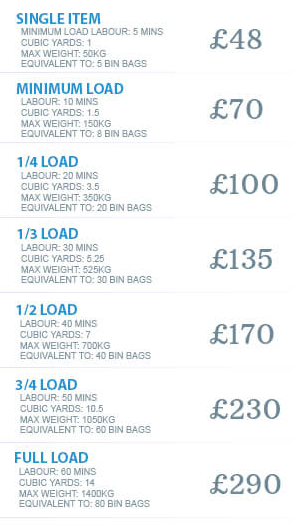
For households, that may be as simple as building a better routine. For landlords, office managers and homeowners tackling a bigger project, it often means bringing in the right clearance support before the mess grows arms and legs. If you want professional help and a clear next step, start by reviewing the pricing and quotes information or learning more about the company through the about us page. And if you are ready to sort your waste properly, get in touch.
Get a free quote today and see how much you can save.
One small change in how you handle rubbish can make the street feel calmer, the property look better, and the whole week run a bit more smoothly. That's worth doing.


 Tipper Van - Rubbish Removal and Waste Disposal Prices in Kensington W8
 Luton Van - Rubbish Removal and Waste Disposal Prices in Kensington W8